
Practical guide
Building a house in Senegal from abroad: the 8 steps, from land to handover
By Ousmane Kane · · 3 min read
Land, drawings, building permit, structural work, finishes: the complete process of a construction project in Senegal, what to watch at each step, and how to stay in control when you live abroad.
Building a house is often a lifetime project, and many of our clients live abroad: in Europe, North America or elsewhere in Africa. Well prepared, it is a project you can control from a distance. Poorly prepared, it is the classic half-finished building waiting for the next transfer. Here are the main steps, in order, as we handle them at KCEC.
1. Define your project and budget
Before talking about drawings, clarify three things: how many rooms you need, what budget you can commit (and at what pace), and whether the house should evolve — an extra floor later, an apartment to rent out, and so on.
This is also the time to get an order of magnitude. Our article on how much it costs to build a house in Senegal gives real prices per floor, in FCFA and euros.
2. Secure the land
This is the step where nothing should be overlooked, especially from abroad. Before buying or building:
- check the type of document: a land title (titre foncier) offers the strongest legal security;
- have the plot checked with the land registry and cadastre services;
- have the plot surveyed and marked to know its exact boundaries.
A land dispute discovered mid-construction can stop everything. A few weeks of checks upfront are worth it.
3. Study the soil
The soil determines the foundations — and therefore the building's strength and part of its cost. On backfilled, sandy, clay or wet ground, a soil survey lets you choose the right foundations instead of "doing what the neighbor did".
4. Design the drawings
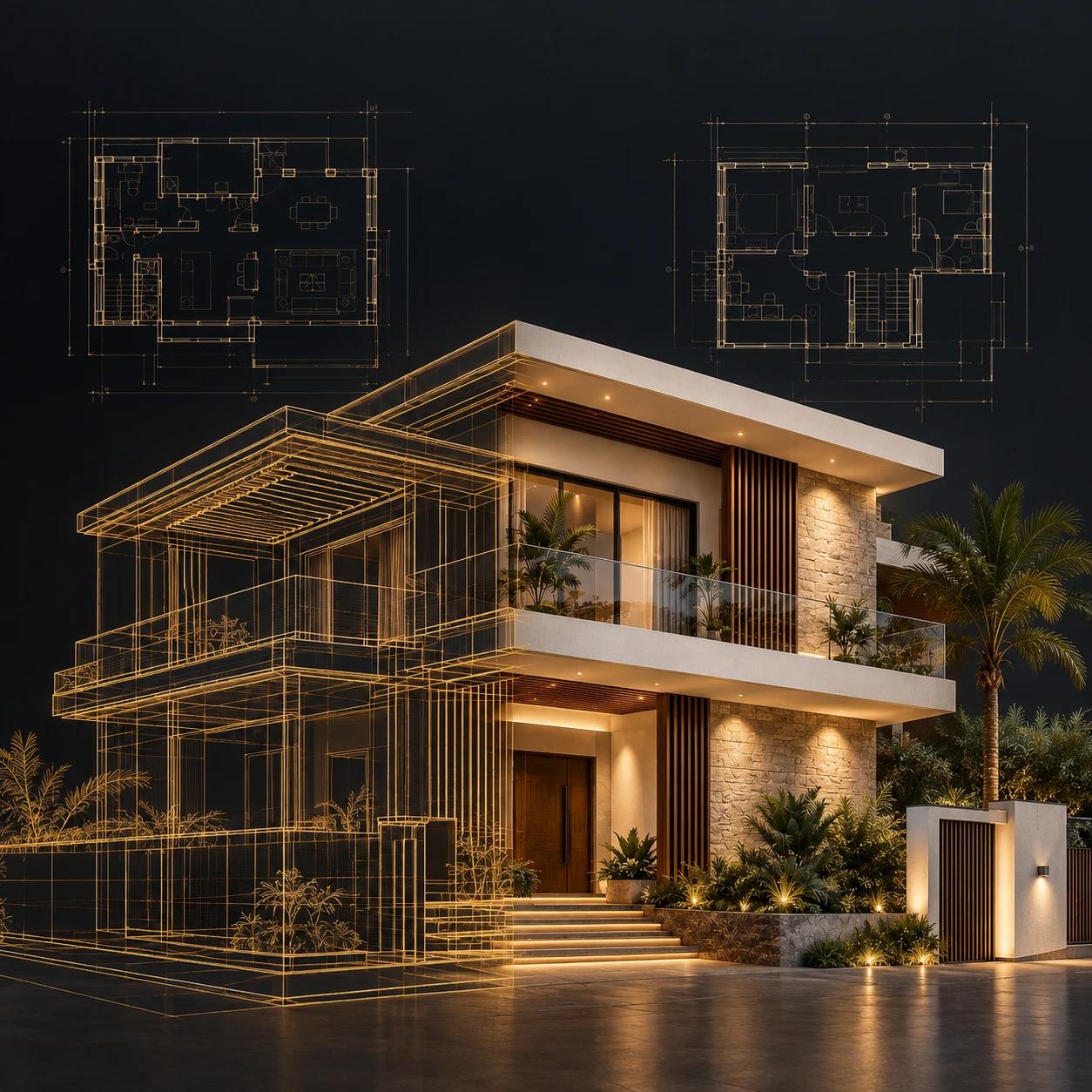
The architect or engineering firm turns your brief into drawings: room layout, facades, orientation (sun, prevailing winds, natural ventilation). At KCEC we also produce 3D renders, so you can see your house before the first shovel hits the ground — and change anything at no cost. For clients abroad, this is also the easiest way to validate a design remotely.
5. Design the reinforced concrete structure
This is the step most often skipped, and the most important. The engineer calculates the foundations, columns, beams and slabs and produces the reinforcement drawings the site will follow. We cover it in detail in why you should hire a structural engineer.
6. Obtain the building permit
The building permit application is filed with the planning authorities, and the process is now largely digital. The file includes the project drawings and the documents proving your rights to the land. A professional can prepare and follow up the application on your behalf.
7. Choose the contractor and start the structural work
With complete drawings, you can get comparable quotes, based on the same quantities. Structural work includes foundations, walls, columns and beams, slabs and the roof terrace.
During this phase, site supervision is decisive: following the reinforcement drawings, concrete mix, aggregate quality, curing times. When you live abroad, independent supervision with regular photos, videos and progress reports is what keeps you in control — and it is what we provide on every KCEC site.
8. Finishes and handover
Next come electrical work, plumbing, rendering, tiling, joinery, painting and waterproofing. At the end, a handover inspection lists any snags to be fixed before you receive the keys.
The most common mistakes
- Starting without complete drawings and improvising along the way.
- Skipping the structural design to save on studies — risking cracks, or worse.
- Not planning for future floors when you intend to build up later.
- Sending large sums upfront without a payment schedule tied to actual progress.
- Leaving the site unsupervised, especially from abroad.
In short
A successful construction project is mostly decided before the site opens: secured land, complete drawings, a calculated structure and a realistic budget. At KCEC we handle each of these steps, from design to handover, with a single point of contact — wherever you live.